
h motos 2025: a tumultuous weekend marked by crashes under capricious weather

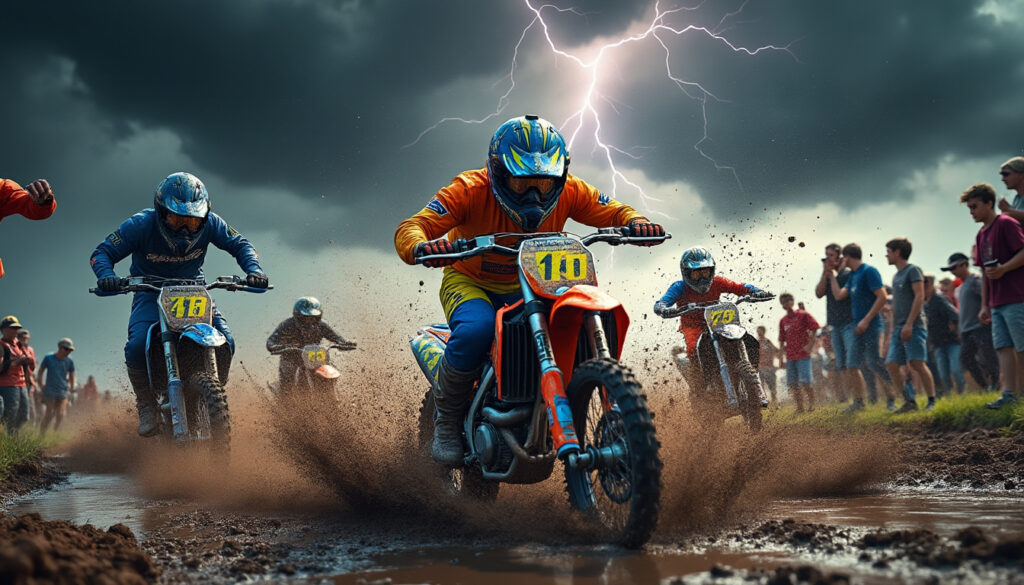
The 48th edition of the 24 Hours Motos took place on the weekend of April 19 and 20, 2025, at the famous Bugatti Circuit in Le Mans. This event, considered one of the most iconic of the World Endurance Championship, once again drew huge crowds. This year, however, the riders had to juggle extreme weather conditions, marked by incessant rain that complicated the race and caused a large number of incidents. As the hours went by, the crashes multiplied, putting the talent and determination of the teams to the test. The weekend was rich in twists and strong emotions, captivating the attention of motorcycle fans around the world.
- The difficult weather conditions
- The early crashes and their repercussions
- The performances of the different teams
- The stakes of motorcycle endurance
- Perspectives for the future of the competition
The difficult weather conditions at the 24 Hours Motos
The 2025 24 Hours Motos were marked by chaotic weather. The race start was scheduled under a threatening sky, but this was only the beginning of a series of unexpected events. The early laps of the race, initially promising, were quickly overshadowed by showers of rain. This capricious weather transformed the Bugatti Circuit into a true ice rink, making driving extremely tricky.
Throughout the weekend, the riders had to cope with changing conditions. The forecasts predicted intermittent rain, but reality exceeded the worst-case scenarios. Teams had to demonstrate adaptability and strategy to manage their race plans. Changing tires, adjusting motorcycle settings, and modifying fuel management were constant imperatives.
Impact of the rain on the race
The rain influenced not only the technical aspect of the race but also the mindset of the riders. The motorcycles, whether Yamaha, Honda, or BMW Motorrad, are all designed to perform well, but wet conditions highlighted the limits of certain machines. Many riders reported a lack of confidence, especially during cornering where the risk was heightened. Excessive speed in such conditions can lead to fatal mistakes.
| Team | Model | Initial position | Incidents |
|---|---|---|---|
| Yamaha | YZF-R1 #7 | 1st | Crash on the 2nd lap |
| Suzuki | GSX-R1000 | 2nd | Crash on the 3rd lap |
| Honda | CBR1000RR | 3rd | Crash on the 4th lap |
The early crashes and their repercussions
The first hours of the race were marked by several incidents. As early as the second lap, the Yamaha n°7, which had started from pole position, crashed, setting an alarming tone for the rest of the event. Closely followed by the Suzuki n°1, which also recorded its crash on the third lap, suddenly disrupted the dynamics of the teams. The crashes had immediate consequences on the rankings and the mood of the remaining riders.
With the competition among leading teams such as Kawasaki and Ducati, the pressure was at its peak. The crashes in these early hours paved the way for strategic adjustments. Teams had to focus on recovery, quickly correcting mistakes and restoring their positions in the standings while trying to stay on track for as long as possible. Several riders reported that these incidents required changes in their riding approach.
The incidents in the Superstock category
The Superstock category was not spared either. The Honda n°55 model from National Motos, which was leading at the beginning, also had a bad encounter with the asphalt. This underscores the brutal reality of endurance racing: speed and technique must be mastered in all circumstances, especially when the rain joins in. Following the crashes, most riders found themselves in a balancing act, ensuring they did not lose grip while trying to maintain a competitive speed.
The performances of the teams and motorcycles
Despite the raging storm, some teams emerged brilliantly. The Honda n°5 took the lead in the race, seizing every available opportunity to navigate through the remains of the competition. Meanwhile, the Yamaha n°36 took the lead in the Superstock category, showing brilliant resilience in the face of adversity.
The riders from these teams demonstrated great mastery of tense situations. Their performances testify not only to their individual talent but also to the result of meticulous preparation and excellent communication within the team. In a sport as unpredictable as motorcycle racing, team cohesion and quick decision-making are key elements in savoring victory.
The lessons learned from the crashes
Each crash represents a lesson. To effectively understand this dynamic, the teams have already begun to analyze their performances and the incidents in depth. Feedback is crucial to avoid future problems. Technical adjustments, as well as psychological ones, will be beneficial for upcoming races.
It is imperative for riders to avoid being overwhelmed by anxiety during an incident. Concentration and self-confidence play a role in success on the rain-soaked asphalt. Competition is not limited to speed; it also demands mental flexibility and emotional control in the face of adversity.
| Team | Final position | Remarks |
|---|---|---|
| Honda | 1st | Impressive performance despite the conditions |
| Yamaha | 2nd | Courage and exemplary strategy |
| Kawasaki | 3rd | Resilience after difficult crashes |
The stakes of motorcycle endurance
In the world of motorcycle racing, endurance goes hand in hand with management: managing speed, resources, technical skills, but also the psychology of the riders. Each edition of the 24 Hours Motos represents a new challenge, both for motorcycles, whether they are KTM, Triumph, or Harley-Davidson, and for the teams. This tumultuous weekend highlighted several crucial issues.
The management of human and technical resources
Managing an endurance race involves more than just riding. It requires logistical, human, and technical skills. The mechanics and strategists are just as essential to success as the riders themselves. The importance of good communication between the pit stop and the motorcycle is vital, and during this race, it proved critical.
- Performance analysis at each lap
- Strategic management of fuel and tires
- Preparation for weather conditions and their evolution
- Optimization of the duration of pilot stints
Perspectives for the future of the competition
The 2025 24 Hours Motos are now behind us, but they leave lasting impressions and lessons to be learned. The new melodies of competition continue to play, and each edition shapes the future of endurance racing. The stakes continue to evolve with technologies, the level of talent among riders and teams, and above all, the growing expectations of spectators.
Sponsors are beginning to play an unprecedented role, drawing attention to technological innovations that can make motorcycles both faster and safer. The desire to secure riders while providing an exhilarating spectacle will be a major challenge for organizers as more people become interested in endurance racing as a distinct form of sport.
The 24 Hours Motos, despite their storms, will always remain a symbol of endurance, bravery, and passion.
Source: actu.fr
Leave a Reply
Articles relatifs