
An important advancement: the new rights of motorcyclists starting from January 11, 2025


France is preparing to undergo a turning point in the field of road traffic, particularly for motorcyclists. Starting January 11, 2025, significant changes will come into force, redefining the rights and obligations of two-wheeled motorized vehicle drivers. This long-awaited reform paves the way for clear and structured regulations concerning lane splitting, a common practice that has thus far been legally ambiguous. What will be the impacts of this decision on the motorcyclist community and road safety in general?
Lane splitting: an official recognition
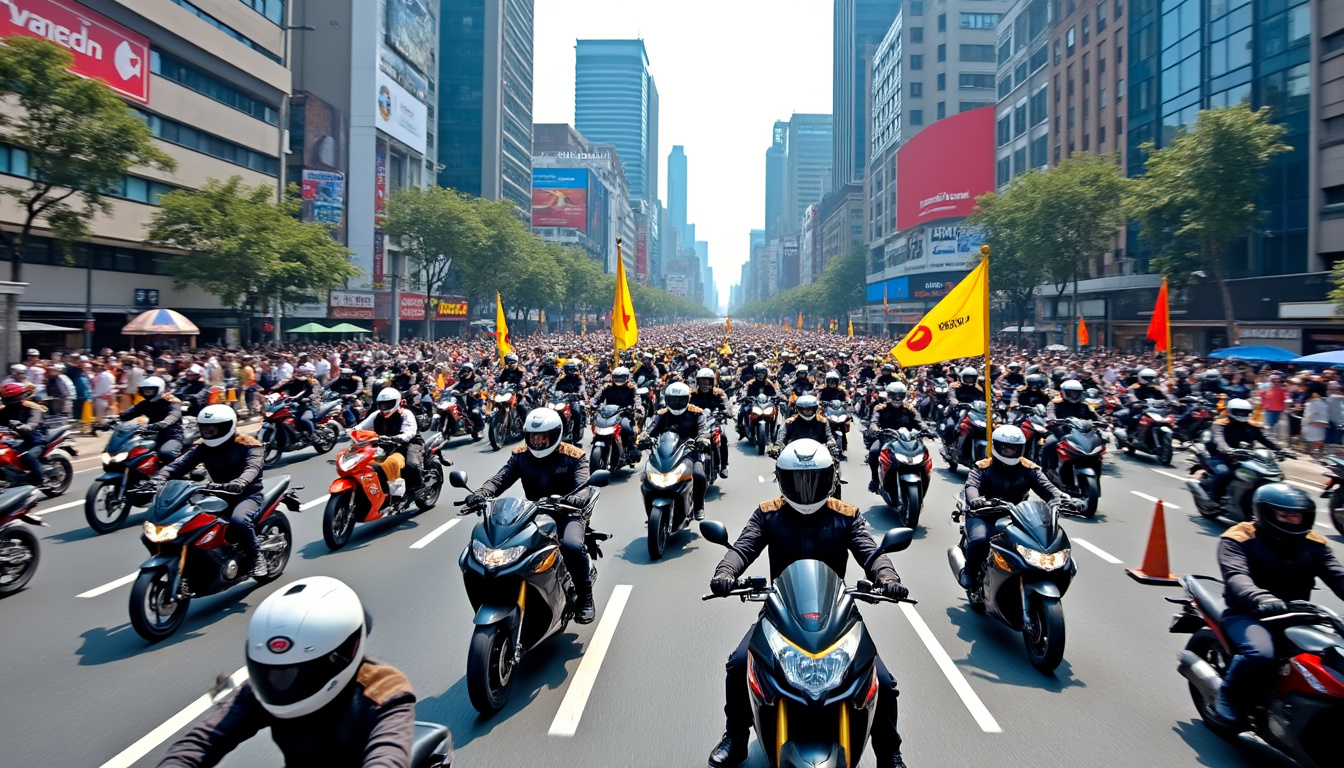
Lane splitting for motorcycles and scooters, long considered a tolerated but unregulated practice, will now be framed legally. From January 11, 2025, this method of traffic will be legalized throughout French territory, marking a significant advancement for motorcyclists' rights. The ability to navigate between stopped or slow-moving cars will no longer be a risky endeavor, but a recognized right.
The new rules governing lane splitting
The implementation of this reform is accompanied by precise rules aimed at ensuring the safety of motorcyclists as well as other road users. These measures include:
- Speed limit of 50 km/h when navigating between vehicle lanes.
- Prohibition of lane splitting in certain areas, notably those with high traffic density or near schools.
- Requirement of a minimum width of one meter for the concerned motorcycles, to ensure they do not obstruct other drivers.
- Obligation to adhere to the indications of traffic signs that signal areas where lane splitting is allowed.
These regulations aim not only to promote responsible driving but also to minimize accident risks. By offering a less ambiguous framework, the government responds to a growing demand from motorcyclists while taking into account the concerns of other road users.
The advantages of lane splitting for motorcyclists
The main advantage of this new regulation lies in the improvement of mobility for motorcyclists. Traffic jams, a true bane of urban circulation, are often sources of frustration. For example, in Paris, traffic can become extremely slow, making the use of motorcycles particularly attractive for those seeking to avoid the inconveniences of rush hour.
Moreover, the legalization of lane splitting allows:
- Reduce the risk of accidents: motorcyclists can streamline their movement rather than being trapped between cars.
- Contribute to a sustainable mobility: preferring the motorcycle over the car eases traffic and reduces carbon footprint.
- Provide better driving comfort, with a position often more pleasant compared to drivers stuck in traffic jams.
Motorcyclists and associations, like the FFMC (French Federation of Angry Motorcyclists), applaud this initiative. They see it as a recognition of their needs and a step toward better integration of two-wheeled vehicles in the French road landscape.
The implications for road safety
While the motorcyclist community rejoices at this advancement, the issue of road safety cannot be overlooked. Regulating lane splitting aims to create a safer environment, but it also imposes greater responsibilities on motorcyclists. Indeed, it requires adequate training and genuine awareness among drivers.
Empowering motorcyclists and driving training
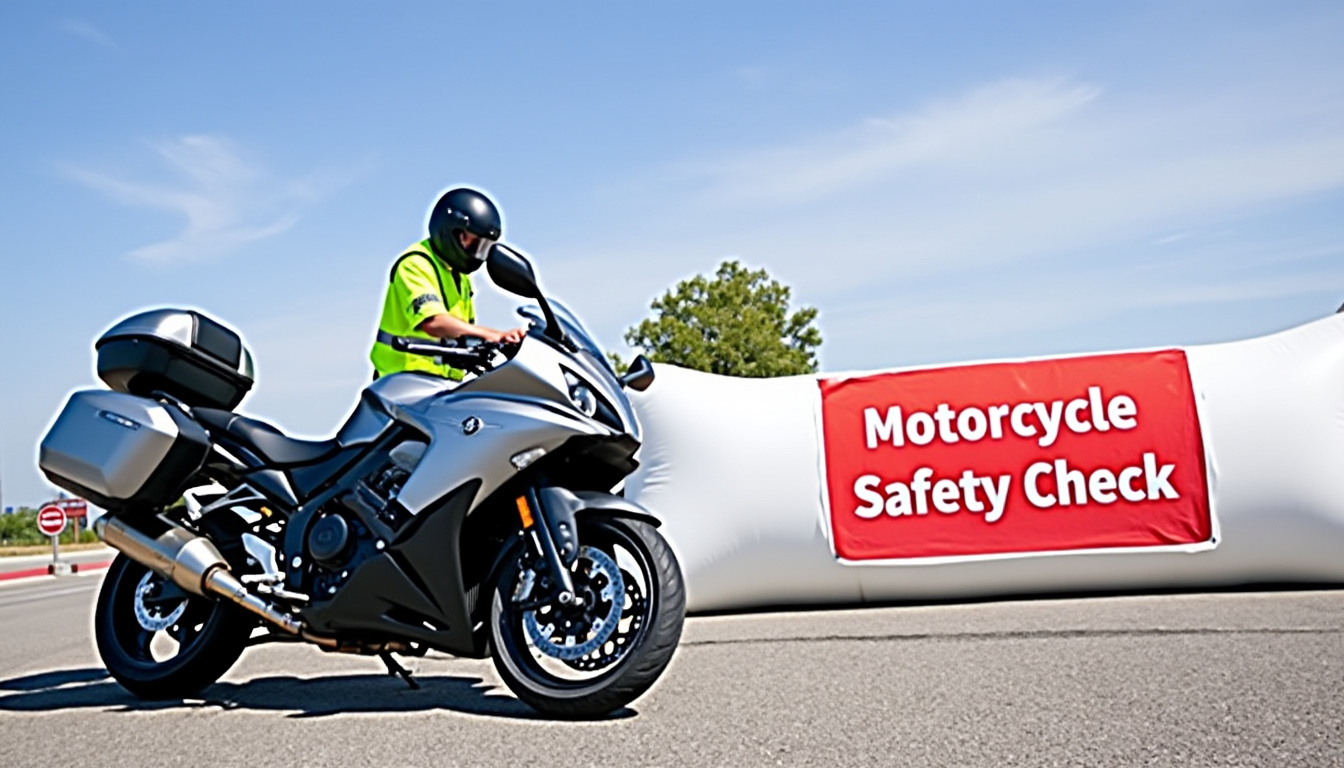
In the context of this new legalization, the driving training of motorcyclists will be of utmost importance. Driving schools must ensure that new drivers are properly trained in the specifics of lane splitting. Adequate training may include:
- Theoretical courses on lane splitting traffic rules.
- Practical exercises under the supervision of qualified instructors.
- Awareness sessions on the importance of protective gear, which becomes even more crucial with the potential increase in speed during lane splitting.
At the same time, experienced motorcyclists must also remain vigilant. The establishment of this regulation could lead to changes in the behavior of car drivers, who may not yet be adapted to this new dynamic. Therefore, increased vigilance and anticipation of the behaviors of other users will be necessary to ensure everyone's safety.
Potential impact on the number of accidents
Studies have shown that unregulated practices, such as unauthorized lane splitting, often lead to reckless behaviors among motorcyclists. With alarming statistics on accidents involving motorcycles, could this reform contribute to a significant reduction in incidents?
Data collected abroad in countries where lane splitting is already legal analyze this issue. Generally, countries where this practice is regulated see a reduction in motorcycle-related accidents, as well as an overall improvement in road safety. This could provide a model for France to follow.
| Country | Motorcycle accidents (before regulation) | Motorcycle accidents (after regulation) | Percentage reduction |
|---|---|---|---|
| Spain | 800 | 600 | 25% |
| Italy | 1200 | 900 | 25% |
| Portugal | 400 | 260 | 35% |
These results could thus guide French legislators and reinforce the idea that regulation is an essential tool for improving road safety.
The economic stakes and challenges related to motorcycle insurance
Beyond safety issues, the implementation of this new regulation also has repercussions on the economic sector, particularly regarding motorcycle insurance. Insurance companies will likely have to adapt their policies to take into account the new legislation. This could lead to adjustments in rates but also in the conditions offered to motorcyclists.
Evolution of insurance practices
With the legalization of lane splitting, insurance premiums could experience significant variations. Insurers may consider that mandatory training and regulated practice lead to lower risks. Consequently, they may offer advantageous rates to motorcyclists who comply with the regulations.
To this end, here are some points to consider:
- Potential evolution of insurance premiums based on compliance with traffic rules.
- Strengthening of specific clauses related to protective equipment and training courses.
- Adaptation of insurance policies to include new traffic practices.
Motorcyclists may therefore have an interest in approaching their insurer to discuss the impacts of the legalization of lane splitting on their contracts.
The challenges ahead for motorcyclists
Despite all the expected benefits, some challenges remain for motorcyclists in the face of this new regulation. Among the main ones, we have:
- The need for genuine awareness of the responsibilities that fall on motorcyclists within this new framework.
- Increased vigilance in sharing the road with other vehicles, especially large trucks that may not always see motorcycles.
- The need to strengthen the sense of belonging to a community, with exchanges and sharing of experiences among motorcyclists to promote safe circulation.
These challenges should not dampen the enthusiasm and goodwill of motorcyclists. By taking these realities into account, they can fully benefit from the new rights that are now granted to them.
The future prospects for motorcyclists in France
With this new measure, many questions arise concerning the future of motorcyclists in France. Could the legalization of lane splitting pave the way for other developments in road policy? Since the introduction of electric motorcycles, the landscape of two-wheel vehicles is in constant flux, and this reform represents another step in this dynamic.

A future focused on sustainability
Another fundamental aspect to consider is the growing commitment to sustainable mobility. Promoting motorcycles as an alternative to cars in urban spaces should not be limited to mere lane splitting. Initiatives may be put in place to encourage the use of low-energy-consuming vehicles, such as electric motorcycles, thus promoting a reduction in carbon footprint.
Government and local authorities could also consider:
- The creation of dedicated motorcycle infrastructure, such as reserved parking and adapted lanes.
- The integration of awareness campaigns on the advantages of two-wheelers for urban mobility.
- Tax incentives for buyers of environmentally friendly motorcycles.
These measures could contribute to enhancing the use of motorized two-wheelers in a legally secure framework, supporting a positive evolution for the entire population.
Building a strong motorcyclist community
Another major challenge will be the need to strengthen the motorcyclist community. With these changes, it will be more important than ever for motorcyclists to come together, exchange ideas, and support responsible behavior on the road. Organized gatherings or informal meetings can allow sharing of experiences while strengthening bonds within this community.
Promotional or awareness events, such as those reported in this article, could also play a key role in this dynamic.
In the long run, these efforts could not only improve the perception of motorcyclists but also reduce tensions between them and other road users by cultivating the image of a community that respects and cares for the safety of all.
Leave a Reply
Articles relatifs